

The land and its first peoples
Long before the city existed, the falls were a known landmark for Native peoples of the northern plains. Blackfeet, Shoshone, and other Indigenous people visited the falls, and Mandan people described them to Lewis and Clark before the expedition ever reached Montana.[2] By the early 1800s the area was part of Blackfeet territory; Salish people had also hunted bison in the region.[15]
Today Great Falls is home to the Little Shell Tribe of Chippewa Indians of Montana, whose headquarters is in the city. The tribe received federal recognition on December 20, 2019.[14]
Lewis and Clark’s portage (1805)
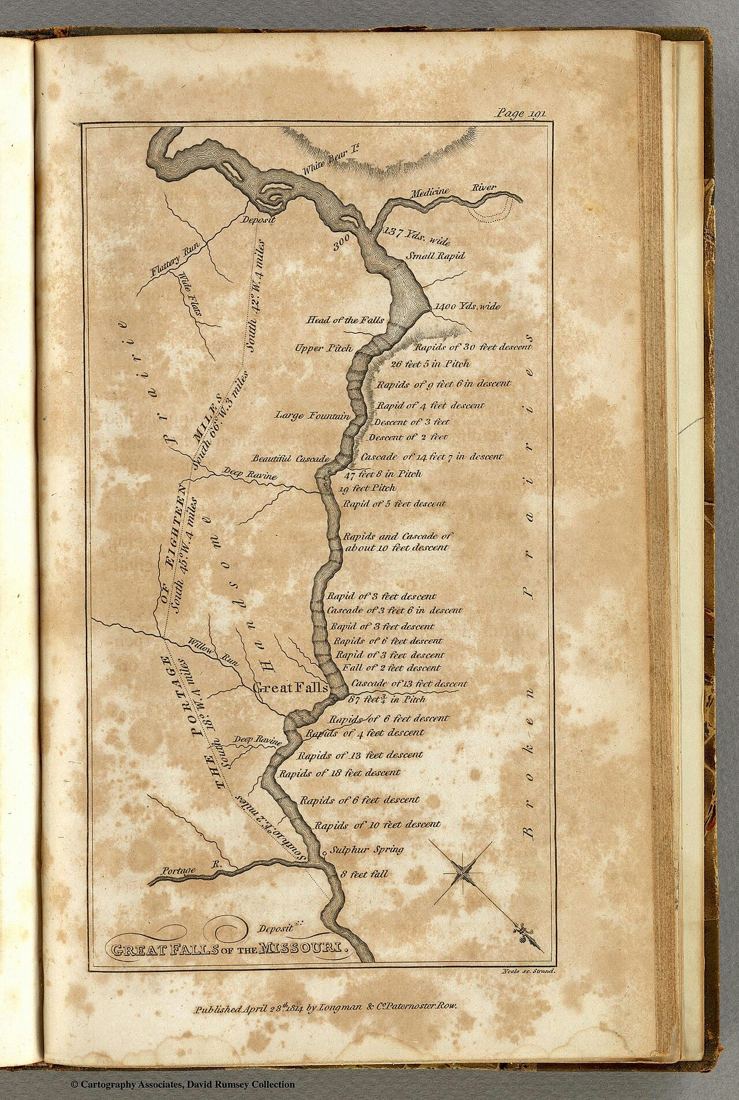

On June 13, 1805, Meriwether Lewis, scouting ahead of the main party, heard the “agreeable sound of a fall of water” and saw spray rising “like a collumn of smoke.” It was the Great Falls, the first of five waterfalls the Corps of Discovery would have to get around.[1]
William Clark surveyed an 18-mile overland route. The men built crude wagons and hauled the canoes and supplies past the falls in summer heat, over prickly pear cactus, with grizzly bears nearby. All supplies reached the upper camp by July 2, and on July 15, after about a month at the falls, the expedition continued up the Missouri.[1][2]
The Lewis and Clark National Historic Trail Interpretive Center, run by the USDA Forest Service, now tells this story on the bluffs above the river.[5]
Paris Gibson founds a city (1883–1888)
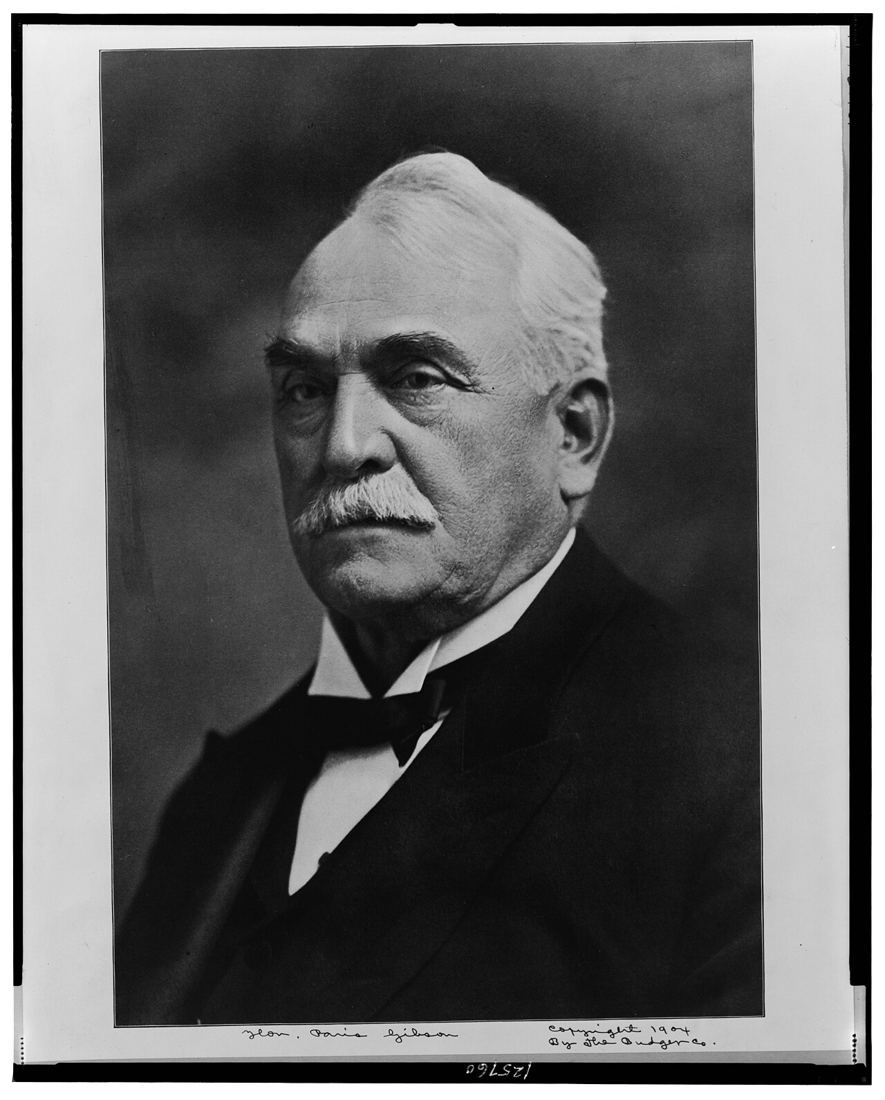

Paris Gibson, a businessman born in Maine, read the Lewis and Clark journals and came from Fort Benton to see the falls. He saw the Missouri and Sun rivers, the wide plain between mountain ranges, and the water power of the falls, and he pictured an industrial city.[6][15]
The townsite was surveyed and platted on the south side of the river in 1883. The City of Great Falls dates its founding to 1884, when the first homes, a store, and a flour mill went up.[6][7][15] Great Falls was incorporated in 1888, and Gibson served as its first mayor. He later represented Montana in the U.S. Senate from 1901 to 1905.[7][17]
James J. Hill and the railroad
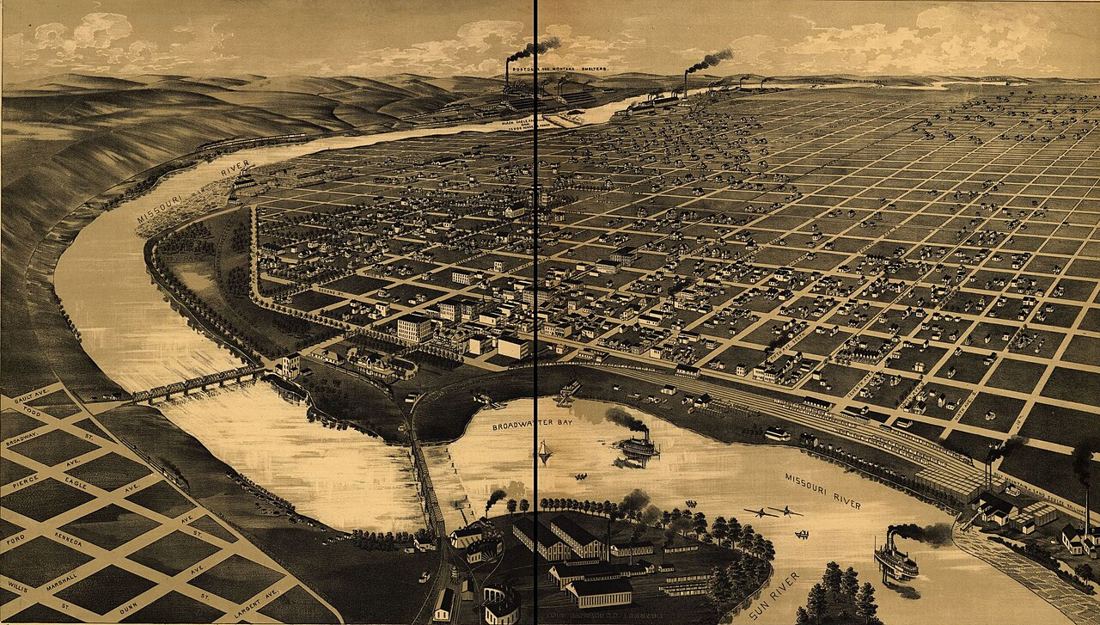

Gibson shared his plan with railroad builder James J. Hill, who saw that a city at the falls would bring business to his lines, and Hill put money into the new town.[6] Hill’s Great Northern Railway reached Great Falls in October 1887, and his Montana Central Railway soon linked the city to Helena and Butte. By then the town had about 1,200 residents.[15]
Black Eagle Dam, the smelter, and the Big Stack
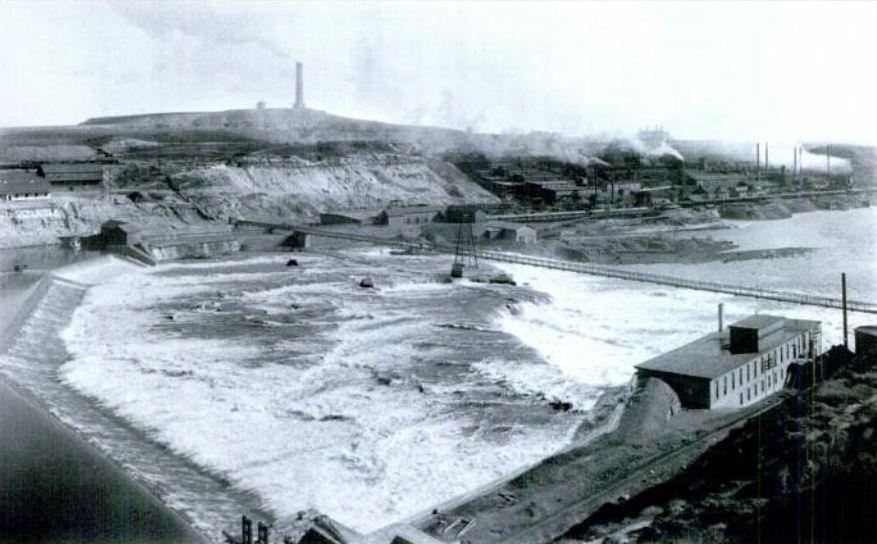

In 1890 Black Eagle Falls became the first of the falls to be dammed, and Black Eagle Dam became the first hydroelectric dam in Montana.[4][16] Cheap power drew a copper smelter to the bluff at Black Eagle, where the Boston and Montana company broke ground the same year. The smelter later became part of the Anaconda Copper Mining Company.[8][15]
In 1908 workers built the smelter’s “Big Stack,” a 506-foot brick chimney that was the tallest smokestack in the world from 1908 to 1914. It gave its last puff of smoke in August 1972, and the smelter closed in September 1980. Despite a community “Save Our Stack” campaign, the stack was demolished on September 18, 1982. The first blast left part of it standing, and crews had to set a second charge.[8]
The five falls and the dams
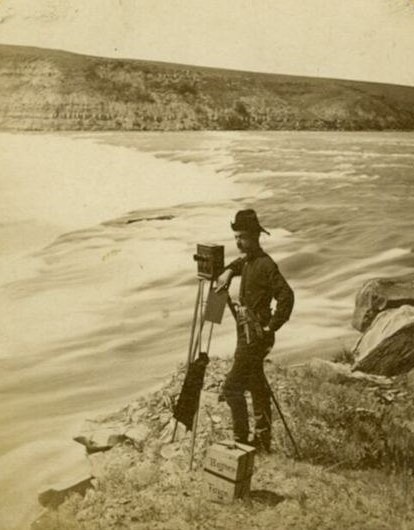

The “Great Falls of the Missouri” are really five falls along about 10 miles of river, dropping a total of 612 feet.[3] Five hydroelectric dams on this stretch gave the city its nickname, “The Electric City.”[3][15]
- Black Eagle Falls – Black Eagle Dam, first built in 1890; about half the falls is submerged.[3]
- Colter Falls – named for expedition member John Colter; now under the reservoir behind Rainbow Dam.[3]
- Rainbow Falls – Clark’s “Beautiful Cascade”; Rainbow Dam was built in 1910.[3][4]
- Crooked Falls – the only one of the five with no dam.[3]
- The Great Falls (Big Falls) – site of Ryan Dam, built in 1915.[3]
Two more dams sit on the same stretch: Morony Dam (1930) and Cochrane Dam (1958).[3] You can see several of the falls from Giant Springs Road and the River’s Edge Trail.[4]
Charles M. Russell
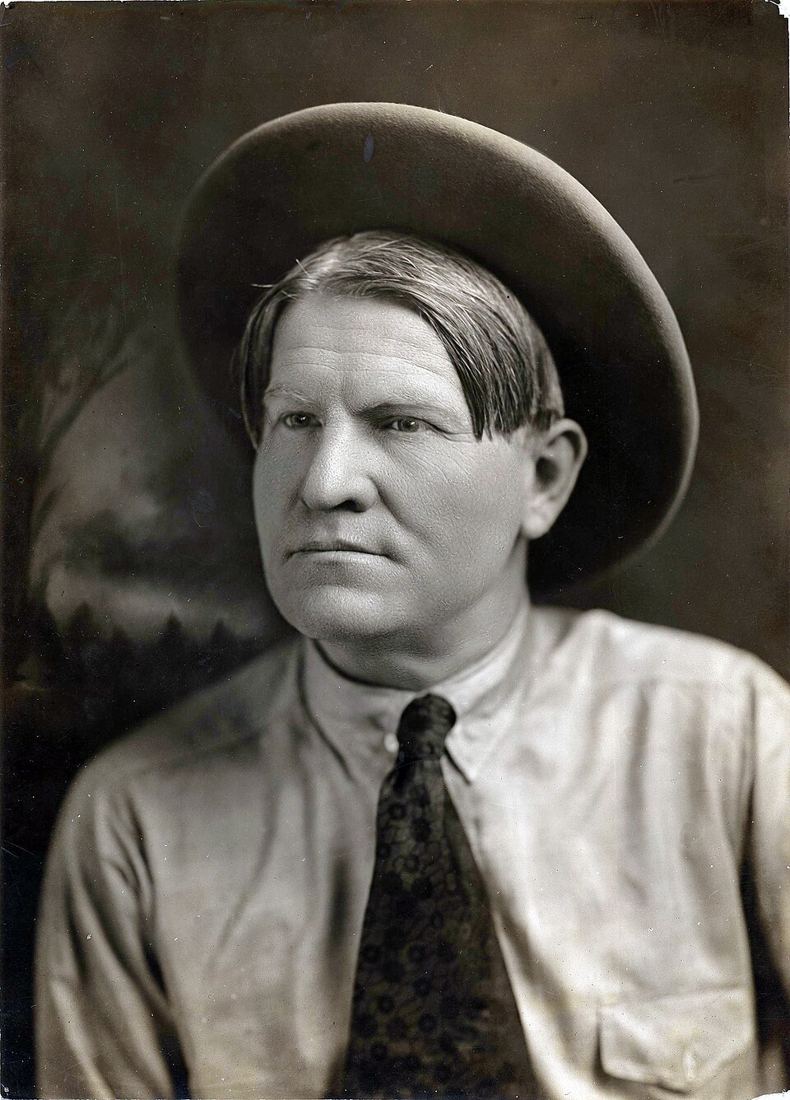

Charles Marion Russell came to Montana from St. Louis in 1880, just after his 16th birthday, to work as a cowboy.[9] He married Nancy Cooper in 1896, and the couple moved to Great Falls in 1897, where Nancy managed the business side of his career.[10]
In 1900 they built a house at 1219 Fourth Avenue North, and in 1903 Russell added a log cabin studio next door. He made most of his major work there.[9][11] He died at his Great Falls home on October 24, 1926.[9][10] The house and studio are a National Historic Landmark and part of the C.M. Russell Museum.[9]
Great Falls today
Great Falls is the seat of Cascade County and had 60,442 residents in the 2020 Census, making it Montana’s third-largest city.[18] The river, the falls, and the history above are still easy to see: walk the River’s Edge Trail, visit the C.M. Russell Museum or the Lewis and Clark Interpretive Center, or drive out to Ryan Dam.
Thinking about a move? See Local Resources, or get in touch.
Sources
- National Park Service, “Great Falls Portage” (Lewis & Clark National Historic Trail)
- National Park Service, “Portage Route”
- National Park Service, “The Five Falls of the Missouri”
- National Park Service, “The Falls of Great Falls”
- National Park Service, “Lewis and Clark National Historic Trail Interpretive Center (Great Falls, MT)”
- City of Great Falls, “History”
- City of Great Falls, history timeline
- The History Museum (Great Falls), “A Beacon Upon the Horizon: The Black Eagle Big Stack”
- C.M. Russell Museum, “Meet Charlie”
- Montana Historical Society, Charles M. and Nancy C. Russell timeline (PDF)
- National Register of Historic Places, C.M. Russell House and Studio nomination (NPS)
- Little Shell Tribe of Chippewa Indians of Montana, official site
- Wikipedia, “Great Falls, Montana” (cross-checked against the sources above)
- Wikipedia, “Black Eagle Dam”
- Wikipedia, “Paris Gibson”
- U.S. Census Bureau, 2020 Census (via Wikipedia, “Great Falls, Montana”)
Sources checked in September 2026. Wikipedia articles were used alongside the primary sources above and checked against them.